Italy Machinery For Filling, Closing, Sealing, Capsuling Or Labelling Containers Market 2026 Analysis and Forecast to 2035
Executive Summary
The Italian market for machinery for filling, closing, sealing, capsuling, or labelling containers represents a critical nexus of advanced manufacturing, robust export orientation, and sophisticated domestic demand. As of the 2026 edition, Italy stands as a global production powerhouse, ranking third worldwide with an output of 324 thousand units in 2024, which underscores its integral role in the international supply chain for packaging automation. The market is characterized by a dual dynamic: a highly competitive domestic landscape serving a diverse industrial base and a strong outward focus, with exports constituting a fundamental pillar of the sector's health. The period under review has been marked by significant price volatility, with both average export and import prices experiencing substantial contractions, reshaping competitive strategies and value chain configurations.
This analysis provides a comprehensive examination of the market from 2026 through a forecast horizon to 2035, synthesizing data on production, consumption, trade flows, and pricing. The report identifies the complex interplay between Italy's position as a leading global supplier and the evolving demands of its key end-use sectors, including food and beverage, pharmaceuticals, and cosmetics. Understanding the shifts in trade partnerships, the strategies of leading domestic and international competitors, and the underlying cost pressures is essential for stakeholders navigating this technologically driven segment.
The outlook to 2035 is framed by several persistent trends and emerging challenges. These include the ongoing need for technological innovation in response to sustainability mandates and flexible production requirements, the recalibration of global supply chains, and the imperative for Italian manufacturers to defend value in a market experiencing pronounced price pressure. This report serves as an indispensable tool for executives, strategists, and investors seeking data-driven insights into the forces shaping one of Italy's flagship capital goods industries over the coming decade.
Market Overview
The Italian market for container handling machinery is deeply embedded in the country's industrial fabric, reflecting its legacy in precision engineering and its leadership in packaging technology. With a production volume of 324 thousand units in 2024, Italy is confirmed as the world's third-largest producer, trailing only China and Germany and collectively accounting for a 68% share of global output. This production base is not solely for domestic absorption but is fundamentally export-oriented, feeding complex global supply chains for packaged goods. The market's structure is bifurcated between large, internationally renowned groups and a dense ecosystem of specialized small and medium-sized enterprises (SMEs) known for niche expertise and flexibility.
Domestic consumption is driven by Italy's own strong manufacturing sectors that require high-speed, reliable, and increasingly intelligent packaging lines. However, the market's size in unit terms is intrinsically linked to its export performance. The significant drop in the average export price to $6.3 thousand per unit in 2024, a decrease of 50.6% from the previous year, indicates a profound shift in the product mix, competitive landscape, or pricing strategies, moving away from the peak of $35 thousand per unit seen in 2018. This price evolution is a critical variable influencing profitability and investment within the sector.
Simultaneously, Italy remains a significant importer of such machinery, sourcing high-value or specialized equipment to complement domestic offerings. The average import price also saw a dramatic correction, falling to $4.2 thousand per unit in 2024, down 60% year-on-year. This parallel decline in both import and export prices suggests broader global market forces at play, including increased competition, potential shifts towards more standardized or lower-cost machinery segments, and changes in the geographic composition of trade flows. The market, therefore, operates in a state of dynamic equilibrium between local production for global export and selective imports to meet specific domestic technological needs.
Demand Drivers and End-Use
Demand for filling, closing, sealing, capsuling, and labelling machinery in Italy is primarily derived from the investment cycles and operational requirements of downstream manufacturing industries. The performance of these end-user sectors directly correlates with capital expenditure on packaging automation. The food and beverage industry represents the largest and most stable source of demand, driven by the need for hygiene, speed, and compliance with stringent safety regulations. Continuous innovation in packaging formats, including sustainable materials and portion-controlled options, necessitates regular updates to machinery fleets, sustaining a base level of demand even in economically subdued periods.
The pharmaceutical and cosmetics industries constitute high-value segments with distinct drivers. Pharmaceutical demand is fueled by uncompromising requirements for accuracy, sterility, and serialization/track-and-trace capabilities mandated by global regulations. The cosmetics sector, closely tied to consumer trends and branding, demands machinery that offers high flexibility for short production runs, intricate packaging designs, and premium finishing. Growth in e-commerce across all sectors has also emerged as a secondary driver, creating demand for machinery that can handle durable, right-sized packaging and efficient labelling for direct-to-consumer shipping.
Beyond sector-specific trends, overarching macro-factors shape demand. These include the continuous pursuit of operational efficiency and labor cost optimization, which favors automation. Furthermore, the global push towards sustainability and circular economy principles is driving demand for machinery capable of handling recycled content, lightweight materials, and refillable packaging systems. Regulatory pressures concerning food contact materials, product safety, and carbon footprint reporting are additional catalysts, compelling manufacturers to invest in new technologies to maintain compliance and market access.
Supply and Production
Italy's supply landscape for packaging machinery is a testament to its engineering prowess, characterized by a clustered and highly specialized industrial ecosystem. The production volume of 324 thousand units in 2024 solidifies its position as a global manufacturing hub. This output is concentrated in renowned industrial districts, where networks of OEMs (Original Equipment Manufacturers) and a vast supplier base of component makers create significant synergies and innovation potential. The sector's strength lies in its ability to offer customized, high-performance solutions rather than solely competing on volume, although the recent sharp decline in average unit prices suggests an intensifying competitive environment.
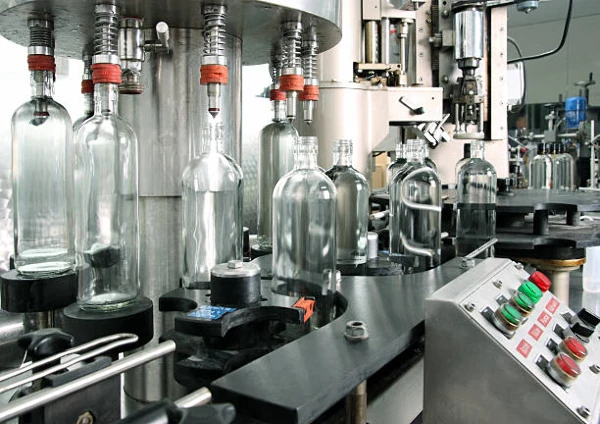
The production mix spans a wide spectrum, from high-speed rotary fillers and cappers for beverage giants to delicate, precision labelling systems for pharmaceutical vials. Italian manufacturers are globally recognized for their expertise in specific niches, such as packaging for pasta, coffee, or luxury goods. This specialization allows firms to command premium positions in certain segments despite broader price pressures. Investment in research and development is focused on integrating Industry 4.0 capabilities, including IoT connectivity for predictive maintenance, advanced robotics for flexible handling, and vision systems for quality control, ensuring Italian machinery remains at the technological forefront.
Supply chain resilience has become a paramount concern following recent global disruptions. Italian producers rely on both domestic and international networks for critical components, such as PLCs, drives, sensors, and stainless-steel fabrications. Fluctuations in the cost and availability of these inputs, along with energy prices, directly impact production costs and lead times. The ability to manage this complex supply chain while maintaining the high quality and reliability for which Italian machinery is known is a key differentiator and a ongoing operational challenge for producers.
Trade and Logistics
International trade is the lifeblood of the Italian packaging machinery sector, defining its scale and strategic orientation. Italy operates as a net exporter, with its trade flows revealing its integration into global value chains. On the import side, Italy sources machinery to fill technological gaps or access cost-competitive options. In value terms, the leading suppliers to Italy in 2024 were Germany ($34 million), Austria ($31 million), and China ($16 million), which together accounted for 52% of total import value. This pattern highlights Italy's trade with other advanced manufacturing nations for high-end components or systems, alongside growing procurement from China, likely for more standardized or auxiliary equipment.
The export profile is where Italy's global influence is most apparent. The United States ($222 million), France ($126 million), and Spain ($104 million) stood as the top destinations for Italian-made machinery, collectively representing 23% of total export value. This distribution underscores the importance of established markets in North America and Western Europe, where Italian machinery is valued for its quality and innovation. Exports to emerging economies are also significant, driven by their industrialization and growing consumer goods markets. The logistics of exporting heavy, high-value, and often custom-built machinery are complex, involving specialized freight forwarding, technical commissioning services, and after-sales support networks that are integral to the value proposition.
The dramatic shifts in trade prices are a central feature of the market dynamics. The average export price of $6.3 thousand per unit in 2024 represents a precipitous fall from historical highs. Similarly, the average import price fell to $4.2 thousand per unit. These concurrent declines can be attributed to several interrelated factors:
- Increased competitive pressure from global manufacturers, particularly in certain machinery segments.
- A potential shift in the product mix towards more modular or lower-cost equipment lines.
- Currency fluctuations affecting transaction values.
- Changes in the geographic composition of trade, with a higher volume of trade occurring in lower-average-price corridors.
This price compression has profound implications for profit margins, investment capacity, and the strategic focus of Italian exporters, who must increasingly emphasize total cost of ownership and advanced service offerings to defend value.
Price Dynamics
The pricing environment for container handling machinery in Italy has undergone a significant transformation, marked by a sustained and abrupt decline in both export and import average unit prices. The export price peaked at $35 thousand per unit in 2018 but had fallen to $6.3 thousand per unit by 2024. This represents a contraction of over 80% from the peak, indicating a fundamental restructuring of the market's value parameters. While a minor recovery of 21% was observed in 2023, the dominant trend over the period has been decisively downward. This trajectory suggests intense competition, potential commoditization in certain equipment classes, and strategic pricing to maintain market share.
On the import side, a parallel trend is evident, with the average price falling to $4.2 thousand per unit in 2024, down 60% year-on-year from a peak of $37 thousand per unit in 2016. The symmetry of these price movements points to global, rather than Italy-specific, market forces. Factors contributing to this environment include the increased presence of manufacturers from cost-competitive regions, greater standardization of machine platforms, and pressure from end-users to reduce capital expenditure. For Italian firms, this creates a challenging dichotomy: maintaining the premium positioning associated with engineering excellence and customization while competing in a market where price sensitivity has markedly increased.
The implications of these price dynamics are multifaceted. For buyers, lower average prices can improve the return on investment for automation projects, potentially accelerating adoption. For Italian manufacturers, margin pressure necessitates a relentless focus on cost optimization in design and production, supply chain management, and operational efficiency. It also elevates the strategic importance of value-added services—such as remote monitoring, lifecycle management, and performance-based contracts—as alternative revenue streams. The ability to innovate and differentiate on factors beyond initial purchase price will be critical for sustaining profitability through the forecast period to 2035.
Competitive Landscape
The competitive arena for packaging machinery in Italy is densely populated and stratified, featuring a blend of multinational conglomerates, large national champions, and a plethora of agile SMEs. The leading global producers, as indicated by 2024 production volumes, are China, Germany, and Italy itself, setting the stage for intense international rivalry. Within Italy, competition occurs on multiple fronts: domestic firms compete against each other and against imported machinery from German, Austrian, and Chinese suppliers, which hold a combined 52% share of Italy's import value. This creates a highly contested market where technological edge, reliability, service, and total cost of ownership are key battlegrounds.
Italian competitors can be broadly categorized. First, large, full-line suppliers offer comprehensive range of solutions across multiple packaging technologies and end-user industries, competing directly with global giants. Second, and more characteristic of the Italian landscape, are specialized "boutique" manufacturers that dominate specific niches—such as labelling for irregular shapes, filling of viscous products, or capsule sealing for pharmaceuticals. These firms compete on deep application expertise and customization. The competitive strategies observed include:
- Continuous investment in R&D for digitalization and sustainable packaging solutions.
- Geographic expansion into high-growth emerging markets.
- Formation of strategic alliances or acquisitions to broaden technological portfolios.
- Enhanced focus on service, spare parts, and modernization of existing machinery fleets.
The sharp decline in average unit prices acts as a powerful market filter. It rewards companies with superior scale, operational efficiency, or unique intellectual property that allows them to maintain margins. It may also drive consolidation as smaller players struggle with profitability, potentially leading to mergers and acquisitions. The long-term winners will likely be those that successfully transition from being pure equipment vendors to becoming partners in productivity, offering integrated solutions that deliver measurable efficiency gains and flexibility for their clients.
Methodology and Data Notes
This market analysis is constructed using a robust, multi-layered methodology designed to ensure accuracy, relevance, and strategic depth. The foundation of the report is built upon comprehensive analysis of official trade statistics, including detailed import and export data classified under relevant Harmonized System (HS) codes for machinery for filling, closing, sealing, capsuling, or labelling containers. This data provides the quantitative backbone for understanding trade volumes, values, directions, and price trends, forming the basis for the calculations of market shares, average prices, and growth rates presented throughout the analysis.
Primary research supplements this statistical foundation, involving targeted interviews and surveys with key industry stakeholders. These include executives from leading machinery manufacturers, both domestic and international; procurement specialists from major end-user industries in the food, pharmaceutical, and cosmetics sectors; and industry association representatives. This primary input provides critical qualitative context on market drivers, competitive strategies, technological trends, and operational challenges that cannot be gleaned from trade data alone, ensuring the analysis reflects ground-level realities.
The analytical framework integrates this data through a combination of descriptive statistics, trend analysis, and comparative benchmarking. Market sizes and shares are derived from production and trade data, cross-referenced with demand-side indicators. The forecast perspective to 2035 is developed using a scenario-based approach that considers the interplay of macroeconomic conditions, regulatory developments, technological adoption curves, and competitive dynamics. It is crucial to note that while the report references the 2026 edition and a forecast horizon extending to 2035, specific absolute numerical forecasts for future years are not presented; the outlook is instead framed in terms of directional trends, key uncertainties, and strategic implications based on the established data and current trajectory.
Outlook and Implications
The trajectory of the Italian market for container handling machinery through the forecast period to 2035 will be shaped by the confluence of persistent challenges and transformative opportunities. The sector's foundational strengths—its deep engineering expertise, clustered ecosystem, and strong export orientation—provide a solid platform. However, navigating the ongoing price pressure, intensified global competition, and evolving end-user demands will require strategic agility. The imperative for continuous innovation, particularly in digital integration and sustainability, will be non-negotiable for maintaining competitive advantage and defending value in a price-sensitive environment.
Several key implications emerge for industry participants. For Italian machinery manufacturers, the focus must shift increasingly towards solution-selling and creating sticky customer relationships through advanced services and data-driven offerings. Diversification into adjacent, high-growth end-markets and geographic regions will be essential to mitigate cyclical downturns in traditional sectors. Supply chain resilience will remain a top operational priority, necessitating potential nearshoring or multi-sourcing strategies for critical components. The price dynamics suggest that operational excellence and cost leadership will be as important as technological prowess for ensuring long-term profitability.
For investors and policymakers, the sector represents a vital component of Italy's advanced manufacturing base. Supporting innovation through R&D incentives, fostering skills development in mechatronics and digital fields, and facilitating international market access through trade agreements are critical enablers. The outlook to 2035 is one of evolution rather than decline, where success will be defined by the ability to adapt to a new value paradigm. Firms that can leverage Italy's traditional strengths in customization and quality while mastering the economics of scale, digital services, and sustainable technology will be best positioned to thrive in the next decade, reinforcing Italy's role as a global leader in packaging machinery.
Frequently Asked Questions (FAQ) :
The countries with the highest volumes of consumption in 2024 were the United States, the Philippines and Japan, with a combined 61% share of global consumption. Malaysia, Canada, Thailand, Kazakhstan, Russia, China and Brazil lagged somewhat behind, together comprising a further 24%.
The countries with the highest volumes of production in 2024 were China, Germany and Italy, with a combined 68% share of global production.
In value terms, the largest filling containers machinery suppliers to Italy were Germany, Austria and China, with a combined 52% share of total imports.
In value terms, the United States, France and Spain constituted the largest markets for filling containers machinery exported from Italy worldwide, together accounting for 23% of total exports.
The average filling containers machinery export price stood at $6.3 thousand per unit in 2024, dropping by -50.6% against the previous year. In general, the export price continues to indicate a abrupt decline. The growth pace was the most rapid in 2023 an increase of 21% against the previous year. Over the period under review, the average export prices hit record highs at $35 thousand per unit in 2018; however, from 2019 to 2024, the export prices remained at a lower figure.
In 2024, the average filling containers machinery import price amounted to $4.2 thousand per unit, reducing by -60% against the previous year. In general, the import price faced a abrupt curtailment. The pace of growth appeared the most rapid in 2023 an increase of 17% against the previous year. The import price peaked at $37 thousand per unit in 2016; however, from 2017 to 2024, import prices failed to regain momentum.
This report provides a comprehensive view of the filling containers machinery industry in Italy, tracking demand, supply, and trade flows across the national value chain. It explains how demand across key channels and end-use segments shapes consumption patterns, while also mapping the role of input availability, production efficiency, and regulatory standards on supply.
Beyond headline metrics, the study benchmarks prices, margins, and trade routes so you can see where value is created and how it moves between domestic suppliers and international partners. The analysis is designed to support strategic planning, market entry, portfolio prioritization, and risk management in the filling containers machinery landscape in Italy.
Quick navigation
Key findings
- Domestic demand is shaped by both household and industrial usage, with trade flows linking local supply to imports and exports.
- Pricing dynamics reflect unit values, freight costs, exchange rates, and regulatory shifts that affect sourcing decisions.
- Supply depends on input availability and production efficiency, creating a distinct national cost curve.
- Market concentration varies by segment, creating different competitive landscapes and entry barriers.
- The 2035 outlook highlights where capacity investment and demand growth are most aligned within the country.
Report scope
The report combines market sizing with trade intelligence and price analytics for Italy. It covers both historical performance and the forward outlook to 2035, allowing you to compare cycles, structural shifts, and policy impacts.
- Market size and growth in value and volume terms
- Consumption structure by end-use segments
- Production capacity, output, and cost dynamics
- Trade flows, exporters, importers, and balances
- Price benchmarks, unit values, and margin signals
- Competitive context and market entry conditions
Product coverage
- Prodcom 28292150 - Machinery for filling, closing, sealing, capsuling or labelling bottles, cans, boxes, bags or other containers, machinery for aerating beverages
Country coverage
Country profile and benchmarks
This report provides a consistent view of market size, trade balance, prices, and per-capita indicators for Italy. The profile highlights demand structure and trade position, enabling benchmarking against regional and global peers.
Methodology
The analysis is built on a multi-source framework that combines official statistics, trade records, company disclosures, and expert validation. Data are standardized, reconciled, and cross-checked to ensure consistency across time series.
- International trade data (exports, imports, and mirror statistics)
- National production and consumption statistics
- Company-level information from financial filings and public releases
- Price series and unit value benchmarks
- Analyst review, outlier checks, and time-series validation
All data are normalized to a common product definition and mapped to a consistent set of codes. This ensures that comparisons across time are aligned and actionable.
Forecasts to 2035
The forecast horizon extends to 2035 and is based on a structured model that links filling containers machinery demand and supply to macroeconomic indicators, trade patterns, and sector-specific drivers. The model captures both cyclical and structural factors and reflects known policy and technology shifts in Italy.
- Historical baseline: 2012-2025
- Forecast horizon: 2026-2035
- Scenario-based sensitivity to income growth, substitution, and regulation
- Capacity and investment outlook for major producing companies
Each projection is built from national historical patterns and the broader regional context, allowing the report to show where growth is concentrated and where risks are elevated.
Price analysis and trade dynamics
Prices are analyzed in detail, including export and import unit values, regional spreads, and changes in trade costs. The report highlights how seasonality, freight rates, exchange rates, and supply disruptions influence pricing and margins.
- Price benchmarks by country and sub-region
- Export and import unit value trends
- Seasonality and calendar effects in trade flows
- Price outlook to 2035 under baseline assumptions
Profiles of market participants
Key producers, exporters, and distributors are profiled with a focus on their operational scale, geographic footprint, product mix, and market positioning. This helps identify competitive pressure points, partnership opportunities, and routes to differentiation.
- Business focus and production capabilities
- Geographic reach and distribution networks
- Cost structure and pricing strategy indicators
- Compliance, certification, and sustainability context
How to use this report
- Quantify domestic demand and identify the most attractive segments
- Evaluate export opportunities and prioritize target destinations
- Track price dynamics and protect margins
- Benchmark performance against leading competitors
- Build evidence-based forecasts for investment decisions
This report is designed for manufacturers, distributors, importers, wholesalers, investors, and advisors who need a clear, data-driven picture of filling containers machinery dynamics in Italy.
FAQ
What is included in the filling containers machinery market in Italy?
The market size aggregates consumption and trade data, presented in both value and volume terms.
How are the forecasts to 2035 built?
The projections combine historical trends with macroeconomic indicators, trade dynamics, and sector-specific drivers.
Does the report cover prices and margins?
Yes, it includes export and import unit values, regional spreads, and a pricing outlook to 2035.
Which benchmarks are included?
The report benchmarks market size, trade balance, prices, and per-capita indicators for Italy.
Can this report support market entry decisions?
Yes, it highlights demand hotspots, trade routes, pricing trends, and competitive context.