India Machinery For Filling, Closing, Sealing, Capsuling Or Labelling Containers Market 2026 Analysis and Forecast to 2035
Executive Summary
The Indian market for machinery for filling, closing, sealing, capsuling, or labelling containers represents a critical and dynamic segment within the nation's broader industrial and manufacturing landscape. This market is fundamentally driven by the explosive growth of India's packaged consumer goods sectors, including food and beverage, pharmaceuticals, personal care, and fast-moving consumer goods (FMCG). As these end-user industries expand to meet the demands of a growing, urbanizing, and increasingly affluent population, the need for efficient, reliable, and technologically advanced packaging automation becomes paramount. The market is characterized by a complex interplay between domestic manufacturing capabilities and a significant reliance on high-value imports from global technology leaders.
This report, the India Machinery For Filling, Closing, Sealing, Capsuling Or Labelling Containers Market 2026 Analysis and Forecast to 2035, provides a comprehensive examination of this vital industrial domain. It offers a detailed quantitative and qualitative assessment of market size, structure, and evolution, analyzing historical trends from the recent past and projecting the trajectory through to 2035. The analysis is built upon a robust methodology incorporating official trade statistics, industrial output data, and demand-side indicators, ensuring a fact-based and objective perspective on market dynamics.
The core findings indicate a market in a state of robust transition. While domestic production caters to a segment of demand, particularly for standard and lower-cost machinery, India remains a major importer of sophisticated equipment. In 2024, the leading suppliers by value were Germany ($112 million), China ($110 million), and Italy ($86 million), which together accounted for 75% of total imports. This import dependency underscores the technological gap and the premium placed on precision, speed, and reliability in advanced packaging lines. Concurrently, India has developed a notable export footprint, with key destinations including the United Arab Emirates, Nigeria, and the United States, reflecting the growing competitiveness of certain domestic manufacturers in specific regional markets.
A critical differentiator in the market is price segmentation, vividly illustrated by trade data. The average import price in 2024 stood at $5.7 thousand per unit, while the average export price was significantly higher at $27 thousand per unit. This disparity suggests that India imports a large volume of lower-to-mid-range machinery, potentially from sources like China, while exporting fewer units of higher-value, more complex systems. The competitive landscape is fragmented, featuring multinational corporations with direct operations or strong distributor networks, alongside a growing cohort of indigenous players striving to move up the value chain through innovation and customization.
The outlook to 2035 is intrinsically linked to macroeconomic trends, regulatory shifts, and technological adoption. Key growth drivers such as rising disposable incomes, stringent pharmaceutical packaging regulations, and the sustainability imperative will continue to shape demand. The market's evolution will be marked by an accelerating shift towards smart, connected machinery, flexible packaging solutions, and a greater emphasis on total cost of ownership over initial purchase price. This report equips stakeholders with the necessary insights to navigate these complexities, identify growth pockets, assess competitive threats, and formulate data-driven strategies for the coming decade.
Market Overview
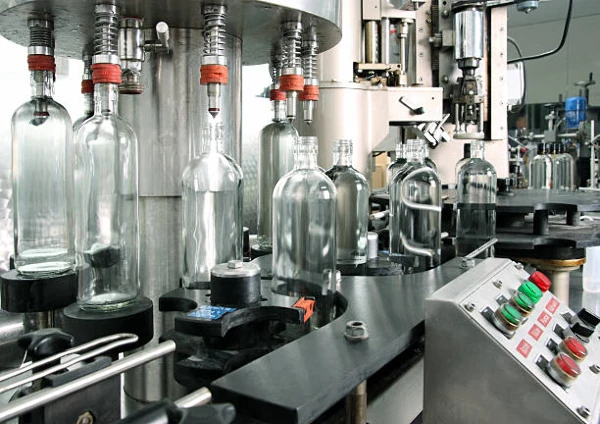
The machinery for filling, closing, sealing, capsuling, or labelling containers encompasses a wide array of automated and semi-automated equipment essential for modern packaging lines. This product category includes liquid fillers, powder fillers, cappers, sealers (induction, thermal), label applicators (pressure-sensitive, glue-based), and capsule filling machines, among others. In the Indian context, this market does not operate in isolation but is a direct derivative of the performance and investment cycles within its client industries. The market's health is a reliable barometer for capital expenditure trends in manufacturing, particularly in consumer-facing sectors.
Globally, consumption patterns highlight the concentration of demand in large, industrialized economies and rapidly developing manufacturing hubs. In 2024, the United States (6 million units), the Philippines (3.6 million units), and Japan (1.2 million units) were the largest consumers, jointly representing 61% of global consumption. This global context is important for understanding India's position; while India is a significant market, its volume consumption does not yet place it among the global top tier, indicating substantial room for growth as its manufacturing base matures and automates further.
On the production side, the global landscape is dominated by established manufacturing powerhouses with deep engineering expertise. China (693,000 units), Germany (656,000 units), and Italy (324,000 units) were the leading producers in 2024, together accounting for 68% of global output. This concentration of supply has direct implications for India, structuring its import channels and technology transfer pathways. India's role in this global system is dual-faceted: it is a major destination for exports from these leading producers, while also cultivating its own production and export capabilities for specific market segments.
The Indian domestic market structure is bifurcated. One segment consists of high-speed, integrated packaging lines often sourced from international leaders, which are prevalent in large-scale pharmaceutical, beverage, and FMCG plants. The other segment comprises standalone, semi-automatic, or lower-speed machines, which are frequently supplied by domestic manufacturers or lower-cost importers and are utilized by small and medium-sized enterprises (SMEs). This segmentation creates distinct competitive dynamics, pricing models, and distribution channels within the overall market.
Demand Drivers and End-Use
Demand for packaging machinery in India is fundamentally non-cyclical in the long term, driven by deep-seated structural trends in consumption and manufacturing. The primary catalyst is the sustained growth of India's population and its economic prosperity, leading to higher per capita consumption of packaged goods. As consumers shift from bulk, commoditized purchases to branded, convenience-oriented products, manufacturers are compelled to invest in packaging that ensures product safety, shelf appeal, and integrity, thereby driving machinery purchases.
The end-use industry landscape is diverse, with each sector presenting unique requirements and growth trajectories:
- Food and Beverage: This is the largest and most dynamic end-user segment. Demand is fueled by the proliferation of processed foods, dairy products, edible oils, and both alcoholic and non-alcoholic beverages. Trends like ready-to-eat meals, small-pack formats, and the need for extended shelf-life through aseptic packaging directly translate into demand for advanced filling and sealing technologies.
- Pharmaceuticals: As a global leader in generic drug production, India's pharmaceutical industry demands high-precision, compliant machinery. Strict regulatory standards for sterility, tamper-evidence, and serialization (as per track-and-trace regulations) mandate the use of sophisticated capping, sealing, and labelling equipment. This sector often prioritizes reliability and validation support over pure cost considerations.
- Personal Care and Home Care (FMCG): The highly competitive nature of this sector, with frequent new product launches and variant proliferation, requires flexible packaging lines. Machinery that allows for quick changeovers between bottle shapes, sizes, and label types is in high demand. The growth of premium personal care products also drives need for high-quality labelling and aesthetic packaging solutions.
- Chemicals and Industrial Products: This segment requires robust machinery for handling aggressive chemicals, powders, and lubricants, often emphasizing safety, containment, and durability over high speed.
Beyond sectoral growth, several cross-cutting megatrends are accelerating machinery replacement and upgrade cycles. The sustainability movement is pushing brands towards lightweight packaging and recyclable materials, requiring compatible sealing and labelling technologies. E-commerce fulfillment has created demand for packaging that can withstand logistics stress, influencing sealing and cushioning equipment needs. Finally, the overarching Industry 4.0 trend, with its emphasis on IoT connectivity, data analytics, and predictive maintenance, is making smart, networked machinery increasingly attractive for large-scale operators seeking to optimize overall equipment effectiveness (OEE).
Supply and Production
The supply landscape for packaging machinery in India is a hybrid model, comprising both indigenous manufacturing and significant imports. Domestic production is concentrated in industrial clusters such as Ahmedabad, Mumbai, Delhi NCR, and Chennai. Indian manufacturers have historically focused on the lower to middle segments of the market, producing sturdy, cost-effective machines that offer good value for money. Their strengths often lie in mechanical engineering, customization for local needs, and providing accessible after-sales service.
However, domestic production faces several structural challenges. These include limitations in access to advanced high-precision components (like servo motors and vision systems), a relative scarcity of specialized R&D focused on cutting-edge packaging technologies, and competition from imported machinery that benefits from economies of scale and decades of specialized engineering know-how. The average import price of $5.7 thousand per unit in 2024 suggests a flood of competitively priced equipment, likely from Asian manufacturers, which places constant pressure on domestic players to enhance their value proposition.
Despite these challenges, the "Make in India" initiative and related production-linked incentive (PLI) schemes in sectors like food processing and pharmaceuticals have indirectly stimulated demand for locally sourced capital equipment. Some leading Indian manufacturers are successfully moving up the value chain by developing more sophisticated machines, forming technology partnerships with foreign firms, and focusing on niche applications where they can develop deep expertise. This gradual upgrading of domestic capabilities is a critical trend to monitor.
The production process for this machinery is engineering-intensive, involving design, machining, assembly, and rigorous testing. Supply chains are global, with critical components often sourced from Europe, Japan, or Taiwan. The ability to ensure a reliable flow of these components and to integrate them seamlessly is a key differentiator between manufacturers. For domestic producers, developing stronger backward linkages and supplier ecosystems for quality components remains a strategic imperative for long-term competitiveness.
Trade and Logistics
International trade is a defining feature of the Indian packaging machinery market, reflecting the gap between domestic demand and local supply capabilities for high-end equipment. India runs a substantial trade deficit in this category, underscoring its status as a net importer of technology. The import channel is the primary route through which global technological advancements enter the Indian market, making trade policy and logistics efficiency critical factors for end-users.
India's import sourcing is strategically concentrated among the world's leading production hubs. In value terms, the largest suppliers in 2024 were Germany ($112 million), China ($110 million), and Italy ($86 million), which together constituted 75% of total imports. This triad represents distinct value propositions: German engineering is synonymous with precision, reliability, and automation for high-speed lines; Italian machinery is renowned for design, flexibility, and expertise in specific niches like cosmetics; Chinese equipment dominates the price-sensitive segment, offering basic functionality at a low capital cost. The choice of supplier is a strategic decision for Indian manufacturers, balancing initial investment, total cost of ownership, and desired technological edge.
Conversely, India has cultivated a meaningful export business, indicating the growing prowess of its domestic industry in certain contexts. In 2024, the leading destinations for Indian-made packaging machinery by value were the United Arab Emirates ($11 million), Nigeria ($11 million), and the United States ($9.9 million), which together accounted for 23% of total exports. This export profile reveals a focus on emerging markets in Africa and the Middle East, where Indian machines offer a favorable cost-performance ratio, as well as selective inroads into developed markets like the U.S., likely for specific, competitively priced models or replacement parts.
The stark contrast between average import and export prices is the most telling trade metric. With an average export price of $27 thousand per unit versus an import price of $5.7 thousand per unit, the data suggests India exports fewer, higher-value machines (possibly complete lines or complex systems) while importing a larger volume of lower-unit-cost equipment. Logistics for this trade involve careful handling of heavy, high-value, and often sensitive equipment. Timely delivery, installation, and commissioning services are integral to the value chain, with many foreign suppliers establishing local technical centers or partnering with strong Indian agents to provide this critical support.
Price Dynamics
Pricing within the Indian packaging machinery market is highly stratified and influenced by a multitude of factors, creating distinct tiers that cater to different customer segments. The primary determinant of price is the origin and technological sophistication of the equipment. Machinery sourced from Western European manufacturers (Germany, Italy) commands a significant premium, justified by superior engineering, materials, automation software, after-sales service, and brand reputation for longevity and precision. This tier serves large multinational corporations and leading domestic players for whom production uptime and consistency are paramount.
The middle tier consists of machinery from other Asian manufacturers (besides China) and from more advanced Indian OEMs. This segment competes on a balance of features, reliability, and price, often appealing to mid-sized companies looking to automate without the capital outlay for top-tier European brands. The most price-sensitive tier is dominated by Chinese imports and lower-cost domestic machines, which offer basic functionality for entry-level automation or for SMEs with very tight budget constraints. The average import price of $5.7 thousand per unit in 2024 is heavily influenced by high volumes in this segment.
Cost structures for machinery are complex. Key components include raw materials (steel, aluminum, plastics), purchased components (motors, drives, sensors, PLCs), labor for engineering and assembly, and overheads for R&D and sales support. Fluctuations in global commodity prices, foreign exchange rates (particularly for the Euro and USD), and supply chain disruptions can all introduce volatility into input costs, which manufacturers may attempt to pass through to customers or absorb to maintain market share.
The trend in average prices reveals important market sentiments. The average import price declined by 3.6% in 2024, indicating competitive pressures, possibly from increased Chinese supply or a shift in the mix towards more economical models. In contrast, the average export price increased by 3.9% in the same year, reaching $27 thousand per unit. This suggests that Indian exporters are achieving some success in selling more valuable equipment, potentially through enhanced features, better branding, or targeting more demanding applications. Over the longer term, both import and export prices have shown relatively flat trend patterns, indicating a stable but competitive equilibrium where significant inflation or deflation has been contained.
Competitive Landscape
The competitive environment in the Indian packaging machinery market is fragmented and multi-layered, with players occupying specific niches based on technology, price point, and service capability. The landscape can be broadly segmented into three groups: multinational corporations (MNCs), established domestic manufacturers, and a long tail of smaller regional assemblers and traders.
Multinational corporations, typically of German, Italian, American, or Japanese origin, dominate the high-end segment. These companies compete not merely on product specifications but on total solution offering. Their key competitive advantages include:
- Global R&D resources enabling continuous technological innovation.
- Comprehensive after-sales service, training, and spare parts networks.
- Ability to supply complete, integrated packaging lines.
- Strong brand equity associated with reliability and performance.
They often operate through wholly-owned subsidiaries, joint ventures with strong Indian partners, or exclusive distributor agreements with well-capitalized local firms that can provide application engineering and service support.
Established domestic manufacturers form the backbone of the mid-range market and are increasingly challenging the lower end of the premium segment. Their strategies for growth and differentiation include:
- Deep understanding of local market needs and customer pain points.
- Offering high levels of customization and flexibility in machine design.
- Providing responsive and cost-effective service and maintenance.
- Pursuing technology licensing agreements or collaborations with foreign firms to upgrade their offerings.
- Leveraging the "Make in India" sentiment and competing aggressively on price for comparable performance.
Competition is intensifying across all tiers. MNCs are developing more cost-competitive models for the Indian market, while ambitious domestic players are investing in R&D to move up the value chain. The distribution and agency network is a critical battleground, as effective channel partners are essential for market reach, lead generation, and local support. Furthermore, competition is evolving beyond hardware, with software for line integration, data management, and remote diagnostics becoming key differentiators, particularly as Industry 4.0 adoption accelerates among large end-users.
Methodology and Data Notes
This report, the India Machinery For Filling, Closing, Sealing, Capsuling Or Labelling Containers Market 2026 Analysis and Forecast to 2035, is constructed using a rigorous, multi-faceted research methodology designed to ensure accuracy, reliability, and analytical depth. The core of the analysis is based on official, verifiable data sources. Primary among these is India's detailed foreign trade statistics, which provide granular data on import and export volumes, values, and country-level trade flows for the relevant machinery Harmonized System (HS) codes. This data forms the empirical backbone for understanding supply-side dynamics and international linkages.
Demand-side assessment is triangulated using multiple approaches. Analysis of production and growth trends in key end-user industries—food processing, pharmaceuticals, beverages, FMCG—provides a top-down view of derived demand. This is supplemented by tracking capacity expansion announcements, capital expenditure plans of major corporations, and government sectoral initiatives (e.g., PLI schemes). Furthermore, insights from industry associations, technical publications, and trade exhibitions help ground the quantitative data in qualitative market reality.
The forecast model for the period to 2035 is not a simple extrapolation but a scenario-based analysis. It incorporates baseline macroeconomic projections for India (GDP growth, industrial output, private consumption), sector-specific growth forecasts for end-user industries, and assumptions regarding technological adoption rates and import substitution trends. The model considers elasticity relationships between end-market growth and machinery investment, while also accounting for cyclical factors and potential policy impacts. Sensitivity analysis is conducted on key variables to present a range of plausible outcomes.
It is crucial to note the definitions and limitations of the data. The market size is expressed in both volume (units) and value (USD or INR) terms, with a clear distinction made between consumption (domestic demand), production (domestic output), and trade (imports/exports). The "unit" measurement can vary in scale from a small standalone labeller to a large rotary filling line, which is why value analysis and average unit prices are essential for meaningful interpretation. All historical data is calibrated to the latest available full-year figures, with 2024 serving as the key base year for this edition. Projections are presented as directional trends and relative growth rates, in strict adherence to the requirement not to invent new absolute forecast figures.
Outlook and Implications
The trajectory of the Indian packaging machinery market through to 2035 will be shaped by the confluence of powerful, sustained demand drivers and an evolving competitive supply landscape. The fundamental growth narrative remains robust, anchored in the continued expansion of India's consumer economy, urbanization, and the formalization of the retail sector. End-user industries, particularly pharmaceuticals and processed foods, are expected to outpace general industrial growth, ensuring a steady stream of investment in packaging automation. The imperative for operational efficiency, product safety, and sustainability will make modern packaging machinery not merely a capital expense but a strategic necessity for competitive survival.
Technological adoption will be the primary force transforming the market's character. The shift from standalone machines to connected, smart packaging lines will accelerate. Demand will increasingly favor equipment with embedded sensors, IoT connectivity for predictive maintenance, and software that enables seamless integration with manufacturing execution systems (MES) and enterprise resource planning (ERP). This trend will favor suppliers with strong digital capabilities and will raise the total cost of ownership conversation above the initial purchase price, potentially benefiting manufacturers who can demonstrate superior lifecycle value.
On the supply side, the interplay between imports and domestic manufacturing will continue to evolve. While Germany, Italy, and China will remain dominant import sources, the structure of imports may shift. Demand for high-end, automated solutions from Europe is likely to grow in line with the sophistication of Indian manufacturing. Concurrently, the "Make in India" policy push and the need for supply chain resilience post-pandemic could provide a tailwind for capable domestic manufacturers. The successful Indian players will be those who transition from being pure equipment fabricators to solution providers, investing in software, service, and application engineering.
For stakeholders—including machinery manufacturers, distributors, end-user companies, and investors—the implications are clear. Suppliers must develop a nuanced, tiered product and service strategy to address the vast spectrum of Indian market needs, from the price-conscious SME to the automation-seeking multinational. End-users should view machinery procurement through the lens of strategic capability building, focusing on flexibility, scalability, and digital readiness to future-proof their operations. The market promises growth, but that growth will be increasingly selective, rewarding innovation, quality, and a deep understanding of the unique challenges and opportunities presented by the Indian industrial landscape. This report provides the foundational intelligence required to navigate this promising yet complex journey to 2035.
Frequently Asked Questions (FAQ) :
The countries with the highest volumes of consumption in 2024 were the United States, the Philippines and Japan, with a combined 61% share of global consumption. Malaysia, Canada, Thailand, Kazakhstan, Russia, China and Brazil lagged somewhat behind, together accounting for a further 24%.
The countries with the highest volumes of production in 2024 were China, Germany and Italy, with a combined 68% share of global production.
In value terms, Germany, China and Italy constituted the largest filling containers machinery suppliers to India, together comprising 75% of total imports.
In value terms, the United Arab Emirates, Nigeria and the United States constituted the largest markets for filling containers machinery exported from India worldwide, with a combined 23% share of total exports. Nepal, Saudi Arabia, Bangladesh, Austria, Kenya, Germany, Thailand, Sri Lanka and Uganda lagged somewhat behind, together comprising a further 28%.
In 2024, the average filling containers machinery export price amounted to $27 thousand per unit, increasing by 3.9% against the previous year. In general, the export price recorded a relatively flat trend pattern. The pace of growth appeared the most rapid in 2023 when the average export price increased by 27%. Over the period under review, the average export prices attained the maximum at $27 thousand per unit in 2018; however, from 2019 to 2024, the export prices remained at a lower figure.
In 2024, the average filling containers machinery import price amounted to $5.7 thousand per unit, declining by -3.6% against the previous year. Over the period under review, the import price, however, continues to indicate a relatively flat trend pattern. The growth pace was the most rapid in 2016 an increase of 45%. As a result, import price reached the peak level of $13 thousand per unit. From 2017 to 2024, the average import prices failed to regain momentum.
This report provides a comprehensive view of the filling containers machinery industry in India, tracking demand, supply, and trade flows across the national value chain. It explains how demand across key channels and end-use segments shapes consumption patterns, while also mapping the role of input availability, production efficiency, and regulatory standards on supply.
Beyond headline metrics, the study benchmarks prices, margins, and trade routes so you can see where value is created and how it moves between domestic suppliers and international partners. The analysis is designed to support strategic planning, market entry, portfolio prioritization, and risk management in the filling containers machinery landscape in India.
Quick navigation
Key findings
- Domestic demand is shaped by both household and industrial usage, with trade flows linking local supply to imports and exports.
- Pricing dynamics reflect unit values, freight costs, exchange rates, and regulatory shifts that affect sourcing decisions.
- Supply depends on input availability and production efficiency, creating a distinct national cost curve.
- Market concentration varies by segment, creating different competitive landscapes and entry barriers.
- The 2035 outlook highlights where capacity investment and demand growth are most aligned within the country.
Report scope
The report combines market sizing with trade intelligence and price analytics for India. It covers both historical performance and the forward outlook to 2035, allowing you to compare cycles, structural shifts, and policy impacts.
- Market size and growth in value and volume terms
- Consumption structure by end-use segments
- Production capacity, output, and cost dynamics
- Trade flows, exporters, importers, and balances
- Price benchmarks, unit values, and margin signals
- Competitive context and market entry conditions
Product coverage
- Prodcom 28292150 - Machinery for filling, closing, sealing, capsuling or labelling bottles, cans, boxes, bags or other containers, machinery for aerating beverages
Country coverage
Country profile and benchmarks
This report provides a consistent view of market size, trade balance, prices, and per-capita indicators for India. The profile highlights demand structure and trade position, enabling benchmarking against regional and global peers.
Methodology
The analysis is built on a multi-source framework that combines official statistics, trade records, company disclosures, and expert validation. Data are standardized, reconciled, and cross-checked to ensure consistency across time series.
- International trade data (exports, imports, and mirror statistics)
- National production and consumption statistics
- Company-level information from financial filings and public releases
- Price series and unit value benchmarks
- Analyst review, outlier checks, and time-series validation
All data are normalized to a common product definition and mapped to a consistent set of codes. This ensures that comparisons across time are aligned and actionable.
Forecasts to 2035
The forecast horizon extends to 2035 and is based on a structured model that links filling containers machinery demand and supply to macroeconomic indicators, trade patterns, and sector-specific drivers. The model captures both cyclical and structural factors and reflects known policy and technology shifts in India.
- Historical baseline: 2012-2025
- Forecast horizon: 2026-2035
- Scenario-based sensitivity to income growth, substitution, and regulation
- Capacity and investment outlook for major producing companies
Each projection is built from national historical patterns and the broader regional context, allowing the report to show where growth is concentrated and where risks are elevated.
Price analysis and trade dynamics
Prices are analyzed in detail, including export and import unit values, regional spreads, and changes in trade costs. The report highlights how seasonality, freight rates, exchange rates, and supply disruptions influence pricing and margins.
- Price benchmarks by country and sub-region
- Export and import unit value trends
- Seasonality and calendar effects in trade flows
- Price outlook to 2035 under baseline assumptions
Profiles of market participants
Key producers, exporters, and distributors are profiled with a focus on their operational scale, geographic footprint, product mix, and market positioning. This helps identify competitive pressure points, partnership opportunities, and routes to differentiation.
- Business focus and production capabilities
- Geographic reach and distribution networks
- Cost structure and pricing strategy indicators
- Compliance, certification, and sustainability context
How to use this report
- Quantify domestic demand and identify the most attractive segments
- Evaluate export opportunities and prioritize target destinations
- Track price dynamics and protect margins
- Benchmark performance against leading competitors
- Build evidence-based forecasts for investment decisions
This report is designed for manufacturers, distributors, importers, wholesalers, investors, and advisors who need a clear, data-driven picture of filling containers machinery dynamics in India.
FAQ
What is included in the filling containers machinery market in India?
The market size aggregates consumption and trade data, presented in both value and volume terms.
How are the forecasts to 2035 built?
The projections combine historical trends with macroeconomic indicators, trade dynamics, and sector-specific drivers.
Does the report cover prices and margins?
Yes, it includes export and import unit values, regional spreads, and a pricing outlook to 2035.
Which benchmarks are included?
The report benchmarks market size, trade balance, prices, and per-capita indicators for India.
Can this report support market entry decisions?
Yes, it highlights demand hotspots, trade routes, pricing trends, and competitive context.